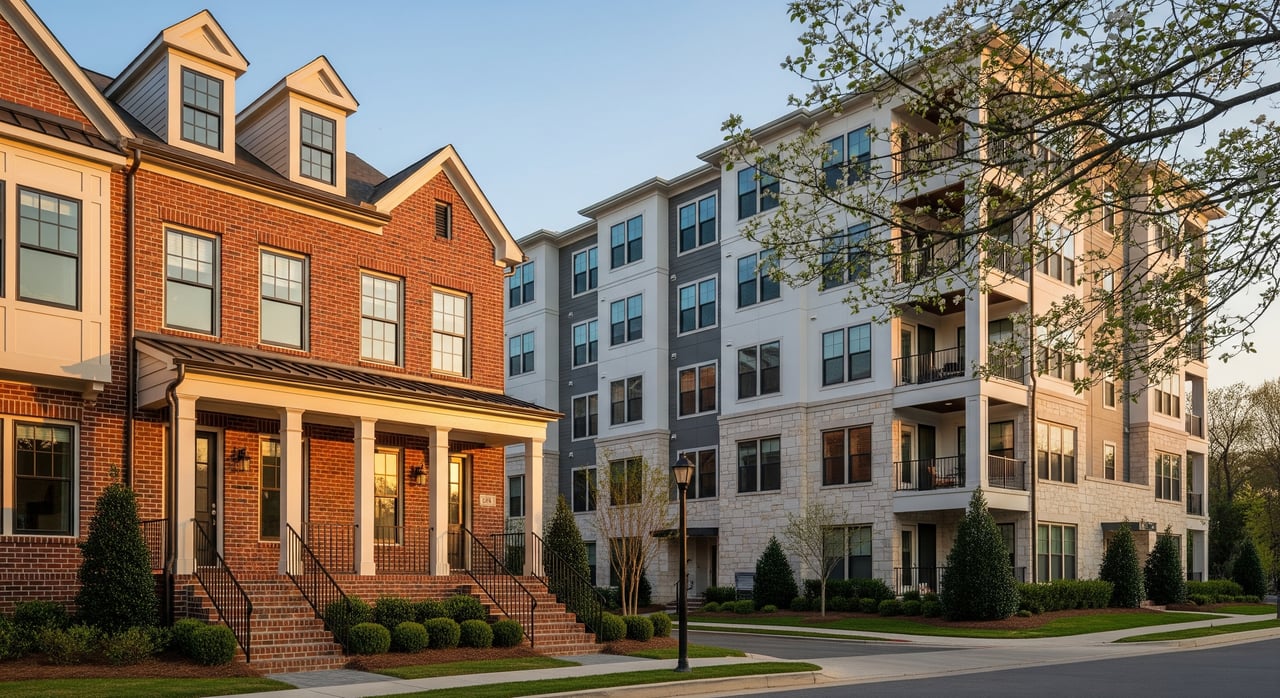
Thinking about buying in Cary and stuck between a condo and a townhome? You’re not alone. Both offer low-maintenance living, but the differences in ownership, fees, and financing can change your monthly costs and your day-to-day life. In this guide, you’ll learn how condos and townhomes compare in Cary so you can make a confident choice. Let’s dive in.
Condo vs. townhome at a glance
- Condos: You own the interior of your unit and share ownership of common areas. A condominium association manages the exterior and building systems.
- Townhomes: You usually own the land and the structure. An HOA may handle shared spaces and amenities. In some communities, townhomes are legally condos, so verify the documents.
- Cary context: You’ll see low- to mid-rise condos near downtown and suburban townhome clusters with small yards and community amenities across planned neighborhoods.
Ownership and legal structure
In a condominium, you own the interior of your unit along with a fractional interest in common elements like the roof, halls, and amenities. The condominium association governs those common elements under North Carolina’s Condominium Act.
In most townhome communities, you own the lot and the building (fee-simple). Many have HOAs that manage common areas and enforce community rules. Some townhome developments are legally organized as condos, so the label in a listing can be wrong.
Always confirm the legal structure. Review the recorded declaration, bylaws, covenants, plat, and the Wake County deed to see exactly what you own and what the association controls.
HOA and monthly fees in Cary
Condo fees in Cary often run higher than many townhome fees because they cover more shared building systems and services. Typical condo fees are roughly $200 to $700+ per month, with many between $250 and $500. Buildings with elevators, extensive amenities, or older systems can cost more.
Townhome fees vary. Many Cary townhome HOAs fall roughly between $75 and $350 per month, depending on what they cover. Fees trend higher in master-planned communities with pools and clubhouses or when exterior work is included.
Why fees differ:
- Scale of shared infrastructure and amenities
- What’s included (exterior upkeep, utilities, on-site staff)
- Reserve funding and recent capital projects
- How dues are allocated (per unit or percentage interest)
Ask for the association budget, reserve study, financials, and rules so you know exactly what your dues cover.
Maintenance and insurance
Condos typically include exterior building care through the association: roof, siding, common systems, elevators, and common-area utilities. You handle interior finishes, appliances, and your personal property.
Townhome owners usually take care of the exterior, roof, and yard unless the HOA documents say otherwise. Some townhome communities include services like landscaping or exterior painting, so check the scope.
Insurance basics:
- Condos: You’ll usually need an HO-6 policy for your interior and belongings. The association’s master policy covers the building and common areas. Review deductibles and whether the master policy is walls-in or walls-out.
- Townhomes: You usually need an HO-3 policy that covers the structure and the lot improvements, unless the HOA’s master policy covers exterior elements. Verify coverage gaps either way.
Pay attention to master policy deductibles and coverage limits. High deductibles and gaps can lead to out-of-pocket costs or special assessments after a loss.
Taxes and assessments
Property taxes in Cary reflect what you own. Fee-simple townhome owners pay taxes on land and structure. Condo owners pay taxes on the value of the unit. Actual amounts depend on Wake County valuation.
Both condos and townhomes may face special assessments for unexpected repairs or big projects. Review meeting minutes and the history of assessments to understand potential risk.
Resale and financing
Buyer pools can differ. Condos may have a smaller pool because of lender rules, rental or pet restrictions, and concerns about fees. Townhomes often appeal to buyers who want more control over land and exterior.
Financing details:
- Condos: Lenders often apply project reviews. FHA and VA loans may require project approval or single-unit approval. Association financial health, reserves, delinquency rates, and litigation history can impact loan options.
- Townhomes: Fee-simple homes are typically financed like single-family properties under conventional, FHA, and VA guidelines, subject to property conditions.
Appraisals rely on comparable sales. Condos are valued against other condos, which can be tricky if sales are limited in a building. Townhomes may have a broader set of comps.
Lifestyle and location fit in Cary
Downtown and corridor condos often trade yard work for walkability and shared amenities like a pool or fitness room. Garden-style complexes can offer community green space without personal yard maintenance.
Suburban townhomes in Cary often add a small yard, driveway, and a feel closer to single-family living. In master-planned communities, you may get amenities like parks and clubhouses while still keeping lower-maintenance living than a detached home.
Choose based on how you prefer to live: low-maintenance interior focus, or more control of exterior space.
Cary buyer checklist
Use this to compare options side by side:
- Ownership: Do you want to own land (townhome) or mainly the interior (condo)? Confirm with the recorded declaration and your Wake County deed.
- Fees: List what dues cover, from exterior care and insurance to utilities and amenities. Compare true monthly costs.
- Maintenance: Decide how much exterior work you want to handle. Verify exact responsibilities in the CC&Rs and bylaws.
- Insurance: Match the policy to the property type (HO-6 for condos; HO-3 often for townhomes). Check master policy deductibles and coverage.
- Financing: If you need FHA or VA, confirm whether the condo project qualifies. Ask your lender about project reviews.
- Flexibility: Review rental and pet rules, parking, storage, and any occupancy limits.
- Financial health: Request the budget, reserve study, financial statements, and meeting minutes. Ask about recent or planned assessments.
- Long-term: Ask about building systems, roof timelines, elevator work, or other capital projects.
- Market: Look at recent sales and days on market in the community to set expectations.
Which is right for you?
Choose a condo if you want minimal exterior responsibility, shared amenities, and you are comfortable with higher dues that include building care. This often suits downsizers and busy professionals who value low-maintenance living.
Choose a townhome if you want more control over the property and a layout that lives closer to a single-family home. This can suit buyers who want a small yard or lower monthly dues in communities with fewer shared services.
Either way, compare total monthly cost, not just price. Add mortgage, HOA or COA dues, insurance, taxes, and expected maintenance to see your real number.
Next steps
Tour a few examples in Cary to see how the numbers and lifestyle stack up. Ask for the association documents up front so you understand fees, reserves, insurance, and rules before you write an offer. If you want a clear, side-by-side breakdown and help reading HOA financials, reach out to Alluvium Elite Realty. We’re a boutique, local team and we’re happy to help. Hablamos español.
FAQs
What are typical condo HOA fees in Cary?
- Many Cary condos fall roughly between $250 and $500 per month, with an overall range around $200 to $700+ depending on age, amenities, building systems, and reserves.
How do townhome HOA fees compare in Cary?
- Many townhome HOAs range roughly from $75 to $350 per month, with higher fees in master-planned communities or when exterior maintenance is included.
Who handles exterior maintenance for each type?
- Condo associations typically cover exterior and common systems, while fee-simple townhome owners usually handle exterior and yard unless the HOA documents state otherwise.
What insurance do I need for each option?
- Condo buyers usually carry an HO-6 policy for interiors and belongings; townhome buyers typically need an HO-3 policy for the structure and lot, subject to HOA master policy details.
How do FHA and VA loans affect condos in Cary?
- Many lenders require condo project approval or single-unit review for FHA and VA; eligibility can affect financing options and timelines.
How can I confirm if a townhome is legally a condo?
- Check the recorded condominium declaration, CC&Rs, plat, and your Wake County deed; do not rely on the listing label alone.